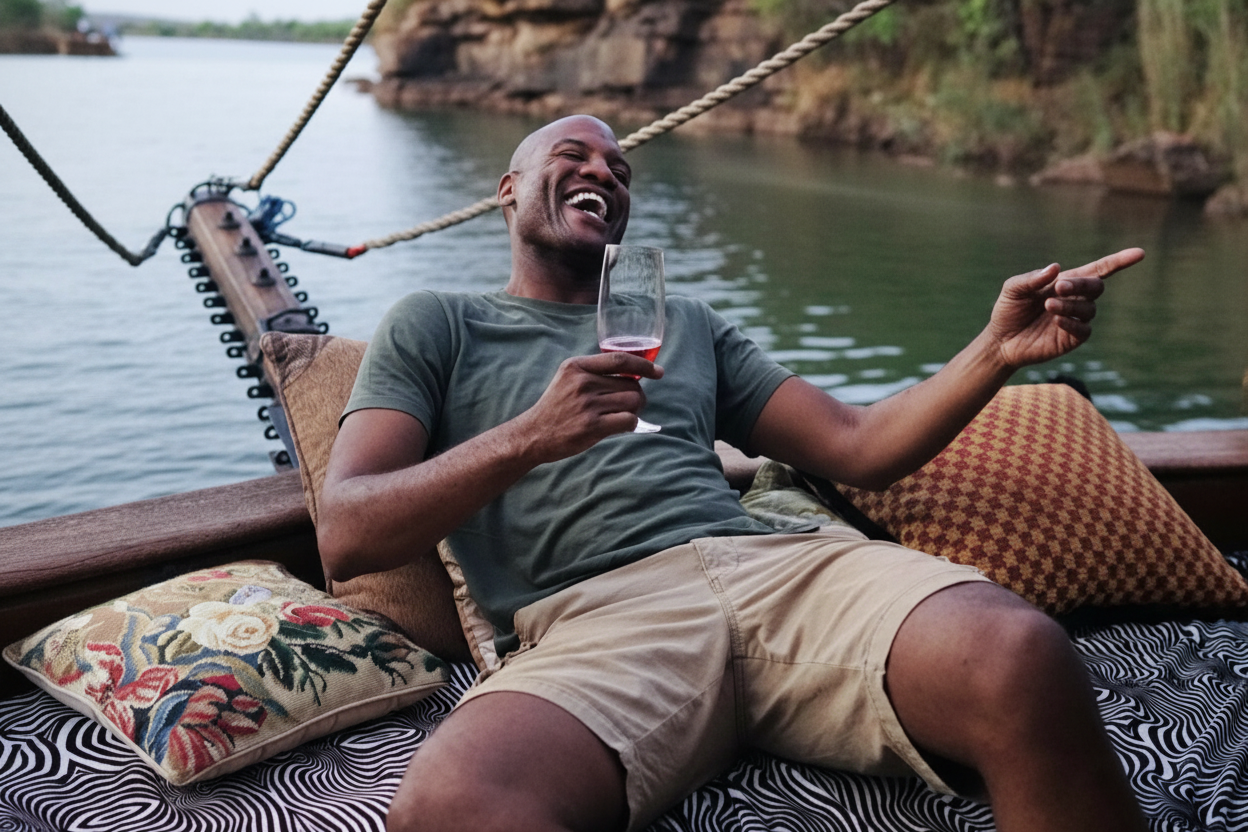
What Is a Luxury Safari?
A luxury safari is the pinnacle of African travel. Forget basic bush camping and crowded game parks—a luxury safari means private game reserves, intimate lodges with 10-20 rooms maximum, expert guides and trackers, gourmet cuisine, and wildlife experiences that bring you face-to-face with Africa's most iconic animals.
As a 5X Condé Nast Top Travel Specialist who has designed dozens of safari experiences, Claire B. Soares explains the difference: 'On a standard safari, you're one of 30 vehicles jockeying for position around a lion sighting. On a luxury safari, you might be the only vehicle for miles. Your guide has been tracking that lion since dawn, and you'll spend an hour watching her teach her cubs to hunt—with a perfectly chilled gin and tonic in hand.'
Luxury safaris typically include twice-daily game drives (dawn and late afternoon), gourmet meals, premium drinks, guided bush walks, and cultural experiences—all within private reserves that limit vehicle density for intimate wildlife encounters.
Where to Go on Safari
South Africa — Our top recommendation for first-time safari-goers. The Kruger region (particularly private reserves like Sabi Sands and Timbavati) offers exceptional Big Five viewing, malaria-free options, and easy combination with Cape Town and the Winelands.
Kenya — The Masai Mara is legendary for the Great Wildebeest Migration (July-October). Kenya's conservancies offer some of the most exclusive safari experiences in Africa.
Tanzania — The Serengeti's endless plains, Ngorongoro Crater's concentration of wildlife, and the lesser-known southern parks offer incredible diversity.
Botswana — The Okavango Delta's water-based safaris (mokoro canoe trips) and Chobe National Park's elephant herds make Botswana a bucket-list destination.
Rwanda — Known for mountain gorilla trekking in Volcanoes National Park, Rwanda offers a unique primate-focused safari experience that's profoundly moving.
What to Expect on a Typical Safari Day
A luxury safari day follows a beautiful rhythm designed to maximize wildlife viewing:
4:30-5:00 AM — Wake-up call with tea or coffee delivered to your room.
5:30 AM — Morning game drive departs. The first light hours are prime wildlife viewing time. Your guide and tracker work together to find the day's most exciting sightings.
8:30 AM — Bush breakfast. This might be a hot breakfast back at the lodge or a stunning bush breakfast set up in the wild with white linen, champagne, and a panoramic view.
9:30 AM-3:00 PM — Free time. Relax at the pool, enjoy a spa treatment, take a guided nature walk, or simply nap in your suite.
3:30 PM — Afternoon tea and snacks before the afternoon game drive.
4:00 PM — Afternoon game drive. As temperatures cool, animals become active again. This drive continues into sunset—sundowners (cocktails in the bush) are a safari tradition.
7:30 PM — Return to the lodge for dinner. Boma dinners under the stars, bush dinners in the wild, and multi-course lodge dining are all part of the experience.
9:00 PM — Optional night drive or stargazing experience.
What to Pack for a Luxury Safari
Packing for safari requires thoughtful preparation. Here's your complete list:
Clothing: - Neutral colors (khaki, olive, tan, brown) — bright colors and white can disturb animals and attract insects - Layers — mornings are cold (40-50°F) and afternoons warm (75-90°F) - Long sleeves and pants for evening drives and mosquito protection - A warm fleece or jacket for open-vehicle game drives - Comfortable walking shoes and sandals - A wide-brimmed hat and quality sunglasses
Essentials: - Binoculars (8x42 or 10x42 are ideal) - Camera with a good zoom lens (200mm minimum, 400mm ideal) - Sunscreen SPF 50+ - Insect repellent with DEET - Malaria prophylaxis (consult your doctor) - A small daypack - Universal power adapter
Pro Tip: Most luxury lodges offer laundry service, so you can pack lighter than you'd expect. Leave the bright colors, colognes/perfumes, and formal wear at home.
The Big Five: What You'll See
The Big Five—lion, leopard, elephant, rhino, and Cape buffalo—are the most sought-after sightings on safari. The term originated from big-game hunting (referring to the five most dangerous animals to hunt on foot), but today it's all about photography and observation.
Lion — Africa's apex predator. Lion prides are relatively easy to find, especially in South Africa's private reserves. Watching a hunt unfold is nature's most dramatic television.
Leopard — The most elusive of the Big Five. Sabi Sands in South Africa has the highest leopard density and the best chance of sightings, especially at night when these nocturnal hunters become active.
Elephant — African elephants are the world's largest land animals. Seeing a herd with babies at a waterhole is one of safari's most heartwarming moments.
Rhino — Both black and white rhinos are endangered. Seeing these prehistoric-looking animals in the wild is increasingly rare and deeply special. Many reserves have dedicated anti-poaching units.
Cape Buffalo — Often underestimated, these powerful animals are considered the most dangerous of the Big Five. Their massive herds create dramatic scenes, especially at river crossings.
Choosing the Right Safari Lodge
Lodge selection can make or break your safari experience. Here's what to look for:
Private vs. National Park — Private reserves offer exclusive traversing rights, no park gate hours, off-road driving, night drives, and walking safaris. National parks like Kruger are more affordable but have more vehicles and restrictions.
Lodge Size — Intimate lodges (10-20 rooms) offer personal attention, flexible schedules, and less competition at sightings. Larger lodges (30+ rooms) offer more amenities but less exclusivity.
Guide Quality — The guide is the single most important factor. Ask about guide qualifications (FGASA levels), experience, and guest reviews focused on guiding.
Wellness Facilities — Top lodges feature full-service spas, plunge pools in suites, and wellness programs. After two game drives per day, spa time isn't luxury—it's necessity.
Our Picks: Singita, andBeyond, Royal Malewane, Lion Sands, and Londolozi are among the lodges we recommend most frequently.
Safari Photography Tips
Camera Settings: Use aperture priority mode (f/5.6-f/8) for sharp wildlife shots. ISO auto with a maximum of 3200-6400. Shutter speed minimum 1/500s for moving animals.
Lens Recommendations: 100-400mm zoom for most wildlife. 24-70mm for landscapes and lodge shots. A fast prime (85mm f/1.8) for portraits and golden-hour shots.
Composition: Don't just zoom in on animals. Include habitat and context—a lion against a sunset, elephants reflected in a waterhole, a leopard in a tree framed by branches.
Phone Photography: Modern smartphones capture excellent safari photos, especially in good light. Use the 3-5x zoom rather than cropping later.
Pro Tip: Bring more memory cards and batteries than you think you'll need. The average safari traveler shoots 500-1,000 photos per day.
How to Book Your Luxury Safari
Ready to experience an African safari? Here's how to travel with Caviar in the Air:
Group Experience — Our signature South Africa Experience includes 3-4 days of luxury safari in the Greater Kruger area, combined with Cape Town and the Winelands. Starting at $7,499 per person.
Private Safari — We design custom safari itineraries across South Africa, Kenya, Tanzania, Botswana, and Rwanda. Multi-country combinations are our specialty.
Book a free consultation to discuss your dream safari and receive a personalized itinerary.