When Should You Visit Ghana?
The best time to visit Ghana is during the dry season from November to March, when temperatures range from 75-90°F with low humidity and clear skies. However, Ghana is a year-round destination, and each season offers distinct advantages depending on what you want to experience.
As a 5X Condé Nast Top Travel Specialist who leads multiple Ghana trips each year, Claire B. Soares recommends December as the peak time: 'December in Ghana is electric. You have Afrochella, holiday celebrations, and the whole diaspora descends on Accra. The energy is unmatched.' For travelers seeking a quieter experience, January through March offers perfect weather with fewer crowds.
Dry Season: November to March
This is Ghana's peak tourist season, and for good reason. The Harmattan winds from the Sahara bring dry, cool air that makes outdoor exploration comfortable. Humidity drops significantly, and rain is extremely rare.
November — The transition month. Rain tapers off, temperatures cool slightly, and hotel rates begin to rise. A sweet spot for value and weather.
December — The most popular month for diaspora visitors. Afrochella (now Afro Future) draws thousands of global visitors for a two-day music and culture festival. Christmas and New Year celebrations are vibrant, with beach parties, cultural events, and incredible energy across Accra. Our Ghana Experience in December is our fastest-selling trip.
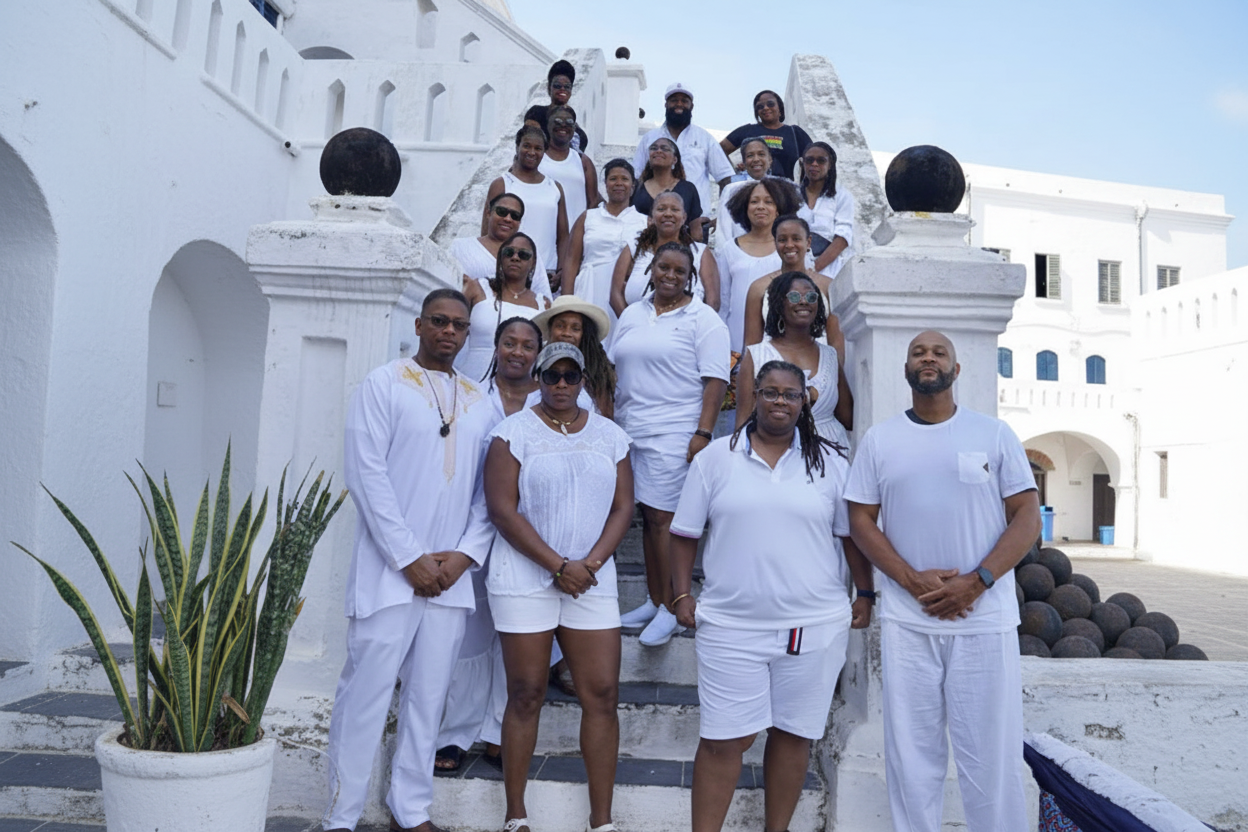
January — Post-holiday calm with perfect weather. Great for travelers who want the best conditions without December's crowds. Ideal for Cape Coast Castle visits when fewer tourists mean a more personal experience.
February — Warm and dry with temperatures reaching the high 80s. Valentine's Day in Accra is a festive affair. The Chale Wote alternative—small pop-up art events—begin to appear.
March — The end of dry season. Temperatures begin climbing but remain manageable. Hotel rates may start dropping, offering excellent value.
Rainy Season: April to October
Ghana has two rainy seasons: a major one from April to July and a minor one in September to October. August is typically drier.
April to June — The heaviest rains, usually in short afternoon downpours rather than all-day affairs. The landscape turns lush and green. Hotel rates are lowest, making this excellent for budget-conscious luxury travelers.
July — Rain begins easing. Independence Day celebrations on July 1st add cultural richness.
August — The Chale Wote Street Art Festival transforms Jamestown into an open-air gallery. Relatively dry with warm temperatures. An underrated time to visit.
September to October — Brief rainy season with lighter showers. Our September/October group trip takes advantage of good rates and manageable weather while the country is at its greenest.
Ghana's Major Festivals and Events
Afrochella / Afro Future (December) — The biggest cultural event in West Africa, combining music, fashion, art, and technology. International headliners and tens of thousands of attendees.
Homowo Festival (August-September) — The Ga people's harvest festival in Accra, featuring traditional drumming, dancing, and the sprinkling of kpokpoi (a traditional food) through the streets.
Chale Wote Street Art Festival (August) — A week-long arts festival in Jamestown featuring live music, street art installations, performances, and cultural exchanges.
Panafest (July-August, biennial) — The Pan-African Historical Theatre Festival at Cape Coast Castle celebrates African arts, culture, and intellectual discourse.
Odwira Festival (September-October) — An Akan purification festival celebrated in Akropong and other towns, featuring chief processions and traditional ceremonies.
What to Pack by Season
Dry Season (November-March): Light, breathable clothing in natural fabrics. Sun hat and quality sunscreen (SPF 50+). Light layers for air-conditioned spaces. Comfortable walking shoes for castle tours and market exploring.
Rainy Season (April-October): All of the above plus a compact rain jacket or poncho. Waterproof phone case. Quick-dry clothing. Umbrella. Water-resistant shoes or sandals with grip.
Year-Round Essentials: Insect repellent with DEET. Modest clothing for cultural sites (shoulders and knees covered). Camera with extra batteries. Small daypack. Power adapter (UK-style plugs). Prescription medications in original containers.
Planning Your Ghana Trip with Caviar in the Air
Our curated Ghana Experience runs twice yearly—typically in September/October and December—to capture the best of each season. Each 8-day journey includes five-star accommodation at the Kempinski Hotel Gold Coast City, Cape Coast Castle and Elmina tours, a traditional naming ceremony, cooking class, and more.
For travelers with specific dates in mind, our private trip planning service creates bespoke Ghana itineraries customized to your schedule, interests, and budget. Book a free consultation to start planning your homecoming.